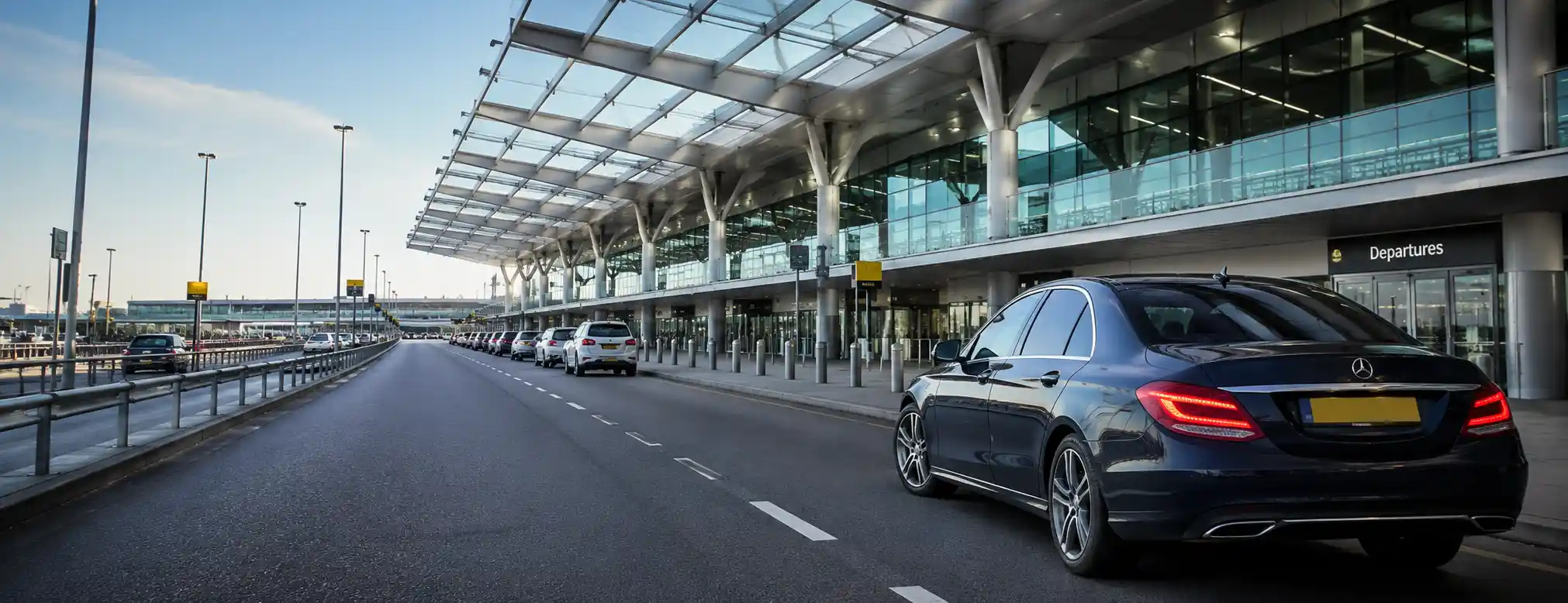
Gatwick South Terminal Drop Off: Costs, Rules and Smart Tips
Quick answer: the Gatwick South Terminal drop off zone sits on the lower level of the terminal forecourt, directly below departures. It costs a minimum of £10 for up to 10 minutes, then £1 for each extra minute, with a 30 minute maximum stay and a £30 daily cap. There are no barriers and no pay machines. Cameras read your number plate on the way in and out, and you must pay online, by phone or through an AutoPay account by midnight the day after your visit. If you want to pay nothing at all, the Long Stay car park gives you two hours free with a shuttle bus to the terminal.
That is the short version. The longer version matters, because the forecourt is where most delays, arguments and unexpected fines happen. This guide covers the exact route in, the payment window, the free and cheaper options, the timings that catch people out, and the small details that competing pages usually skip. Prices quoted here are correct at the time of writing (August 2026) and are set by the airport, so it is always worth a final check before you travel.
.png) From £10
From £10
.png) Up to 30 Minutes
Up to 30 Minutes
.png) Pay Online
Pay Online
.png) 2 Hours Free
2 Hours Free
What The Gatwick South Terminal Drop Off Actually Costs Today
The drop off zone is a marked forecourt area outside the South Terminal building where drivers may stop briefly to let passengers out. It is not a car park, and it is not a waiting area. The moment your wheels cross the entry line, the clock starts.
-
Minimum charge: £10 for up to 10 minutes
-
Extra time: £1 per additional minute
-
Maximum stay: 30 minutes
-
Daily cap: £30 per vehicle
-
System: barrierless, with automatic number plate recognition (ANPR)
-
Payment deadline: midnight the day after you use the zone
-
Exemption: Blue Badge holders, once their vehicle is registered in advance
Key takeaway
The charge applies per vehicle entry, not per passenger. A car carrying one traveller and a people carrier carrying six pay exactly the same. It also applies whatever the time of day. There is no cheap overnight rate and no free early morning window, so a 4am drop off at Gatwick South Terminal costs the same as a 4pm one.
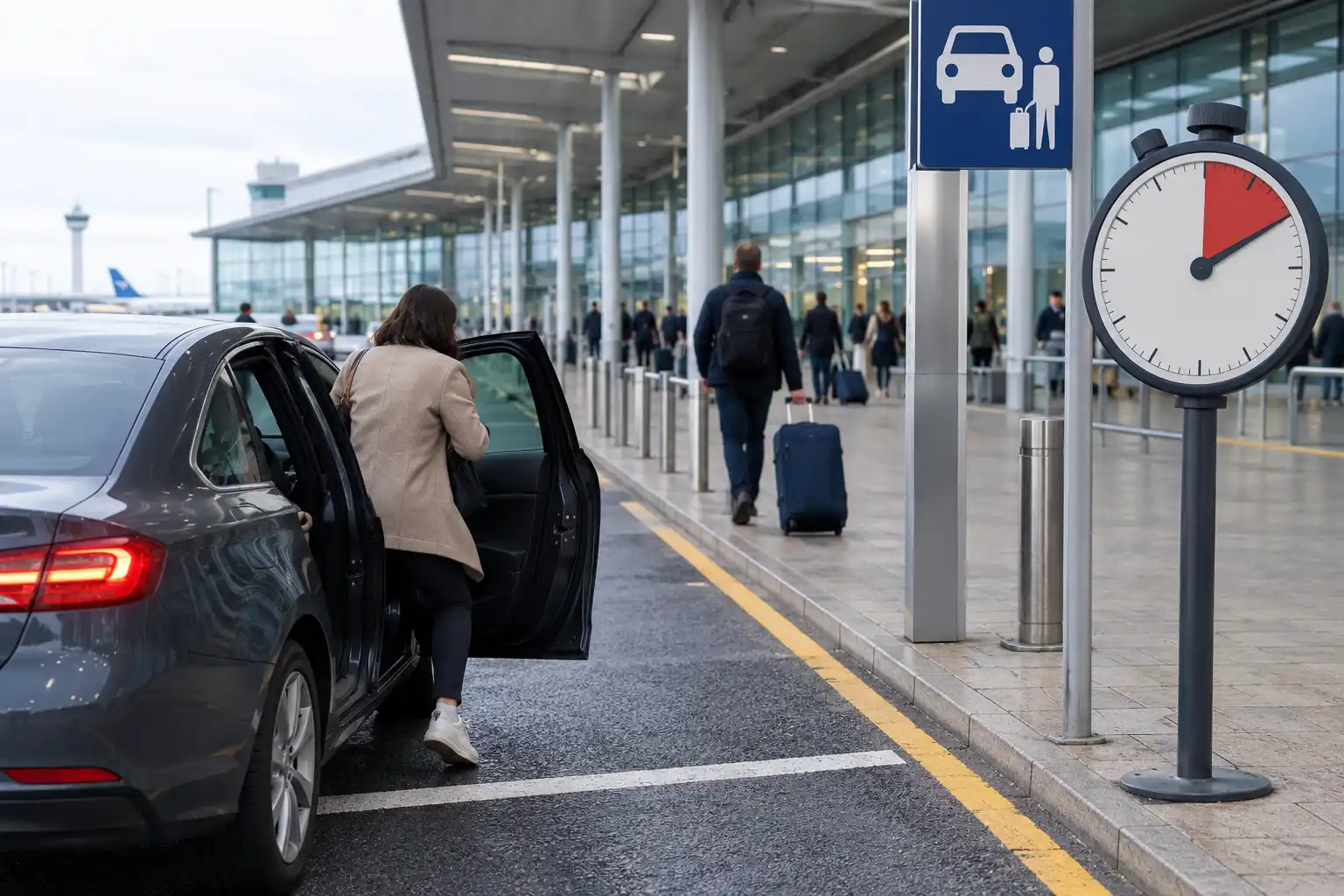
Drop off zone
Lower level · Terminal forecourt
Gatwick South Terminal Drop Off Charges Explained By The Minute
The pricing structure rewards speed. Most drivers are in and out inside four minutes, which means they pay the £10 minimum and nothing more. Problems only start when someone treats the forecourt as a place to reorganise suitcases or say a long goodbye.
| Time in the zone | What you pay | Typical situation |
|---|---|---|
| 0–10 minutes | £10 | Standard drop off, bags already sorted |
| 15 minutes | £15 | Hunting for a space at a busy time |
| 20 minutes | £20 | Helping with bags, a slow goodbye |
| 30 minutes (maximum) | £30 | Waiting for someone, which the zone is not designed for |
| Second entry, same day | Charged again, up to a £30 daily cap | Wrong terminal, or returning with a forgotten passport |
Two details are widely misunderstood. First, the Gatwick South Terminal drop off charge is triggered by entry, not by how long you park. Even a 40 second stop is billed at the full £10. Second, each separate entry is a separate charge. Drive in, realise your passenger left a bag at home, drive out and come back an hour later, and you have two charges on the same plate.
Compared with other UK airports, the Gatwick South Terminal drop off charges sit at the higher end. That is worth knowing if you are budgeting a family trip where several relatives are travelling in separate cars, because three vehicles means three separate £10 fees, not one.
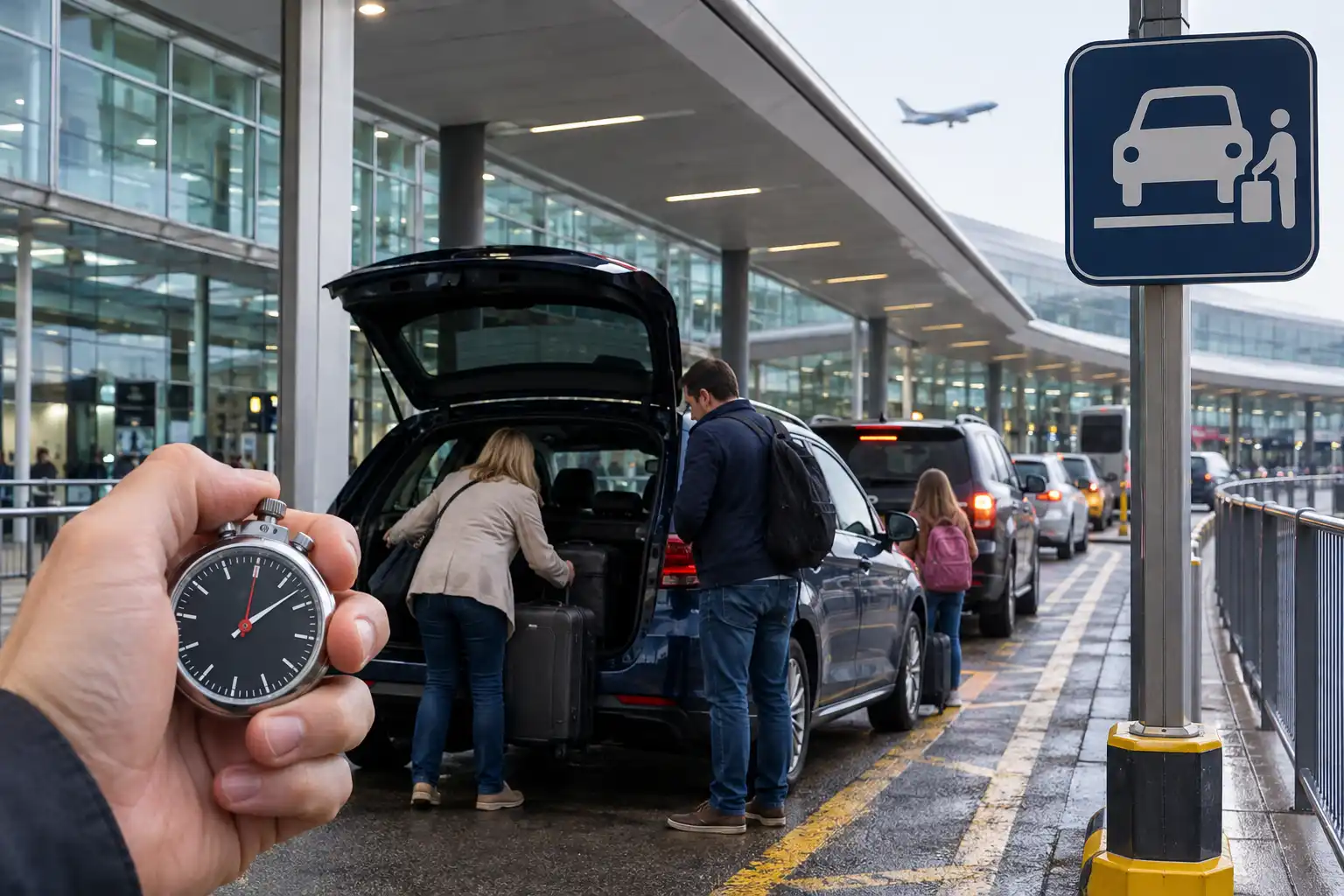
Minimum £10 for up to 10 minutes
Finding The Gatwick South Terminal Drop Off Zone By Car Today
The South Terminal drop off zone is on the lower level of the terminal forecourt, a short covered walk from the check-in hall on the departures level above. Signage picks you up early, so the route is easy once you know the sequence.
From the M23, leave at junction 9 and follow signs for the airport. At the first roundabout (J9a), use the filter lane and turn left, following signs for the South Terminal rather than continuing to the North Terminal. From there, follow the "Drop Off" signs and stay alert for the lane split, because the same stretch of road serves the Short Stay car parks and the forecourt. Miss the split and you are committed to a car park entry barrier or a full loop of the approach road. Drivers heading to the coast, into Surrey or back into the city often arrive by pre-booked car instead, and a fixed-price Gatwick Airport taxi service removes the forecourt decision entirely because the driver handles the fee and the route.
The postcodes drivers actually need
The Gatwick South Terminal drop off postcode most people use for sat navs is RH6 0NP, which is the general South Terminal address. It brings you to the correct terminal approach road, and the final approach is best done by following the overhead signs rather than the screen. Two related postcodes are worth saving:
- RH6 0NP – South Terminal (use this as your Gatwick South Terminal drop off postcode)
- RH6 0LL – South Terminal Short Stay car parks
- RH6 0NY – South Terminal Long Stay car park, the free two hour option
Sat nav postcodes at large airports cover a wide area, so treat them as a guide to the right entrance rather than a precise pin. Once you are inside the airport boundary, the road signs are more reliable than any app.
A Step By Step Guide To Dropping Off At Gatwick South Terminal
Dropping off at Gatwick South Terminal works best when the car is "airport ready" before you reach the roundabout. Follow this order and you will be back on the approach road in under five minutes.
- Confirm the terminal before you leave home. Check the boarding pass, not memory. Airline terminal allocations change, and going to the wrong one costs you a second charge plus 15–20 minutes.
- Sort luggage before the airport. Put hold bags where they can be lifted out in one go. Keep passports, wallets and boarding passes on the passenger, not in the boot.
- Follow signs for South Terminal, then Drop Off. Stay in the correct lane on the approach and do not switch at the last second.
- Pull fully into a marked bay. Stopping in the through lane blocks traffic and is unsafe with children and trolleys about.
- Unload, hand over the bags and say goodbye quickly. Long farewells belong in the Short Stay car park, not the forecourt.
- Note your registration and the date. You will need both to pay, and phones in a hurry are unreliable.
- Drive out and pay the same day. Do it while you remember, ideally before you get home.
One habit separates confident drivers from stressed ones: rehearse the exit. Know that you will rejoin the airport loop road and head back towards J9a. If a group is travelling together with several cases and a pushchair, a pre-booked airport transfer service can be calmer than two family cars, because everyone arrives at the same kerb at the same moment.
How To Make Your Gatwick South Terminal Drop Off Payment Online
There are three ways to settle the fee, and all of them happen after your visit rather than at the kerb. Cash is not accepted anywhere in the zone and there is nothing to collect on arrival.
The three payment routes
- Online: pay at the airport's official drop off payment page using your registration number and the date of your visit. Cards, and wallet options such as Apple Pay or Google Pay, are the norm.
- By phone: an automated payment line handles card payments if you would rather not use a website.
- AutoPay: register your vehicle in advance and the charge is taken automatically after each visit. This is the safest option for anyone who does the run more than once or twice a year.
The deadline is the part that catches people out. Your Gatwick South Terminal drop off payment must be made by midnight the day after your visit. Miss it and a Parking Charge Notice follows, which is far more expensive than the original £10. If you drop off at 5am on Saturday, you have until midnight on Sunday.
You cannot pay before you enter the zone, because the system cannot calculate the fee until your exit is recorded. That surprises drivers who search for "drop off Gatwick South Terminal" the night before and expect to pre-book like a car park. Set a phone reminder for the same evening instead. If you would rather never think about it again, book a standard taxi for the airport run and the charge is built into the fare your driver quotes.
Free And Cheaper Alternatives To The Forecourt Drop Off Zone
Yes, there is a genuinely free option. The Long Stay car park at the South Terminal gives up to two hours free, with a free shuttle bus to the terminal that takes roughly 5–12 minutes depending on traffic and where the bus is in its loop. This is the true free parking alternative, and it works as a park and ride for drop offs and pick ups alike.
| Option | Cost | Walk or transfer | Best for |
|---|---|---|---|
| Forecourt drop off zone | £10 for 10 minutes | Under 2 minutes to check-in | Speed, tight schedules, bad weather |
| Long Stay (park and ride) | Free up to 2 hours | Shuttle bus, allow 20–30 minutes total | Saving money, longer goodbyes, delayed flights |
| Short Stay car parks | From around £8 for 30 minutes on the day | Short covered walk | Helping someone to the desk, meeting a group |
| Premium Short Stay | Higher roll-up rate | Closest bays, same-level access | Mobility needs, heavy luggage |
| Train, coach or pre-booked car | Varies | Direct to terminal | Avoiding driving and charges altogether |
When people compare Gatwick parking South Terminal drop off options, they usually assume the forecourt is the cheapest because it is the shortest stop. On a strict cost basis it is not. Long Stay is free within two hours, and even the Short Stay car park can work out sensibly if you were going to overstay the ten minute window anyway. The Gatwick South Terminal drop off charges only look good value when time is the scarce resource, not money.
A practical note on Short Stay: the South Terminal short stay car parks are colour-coded and multi-level, and the orange car park signage is the one most drivers remember. Photograph the level and colour where you park. On the way back, blue and orange zone signs look very similar at 5am when you are running late. For groups who want a door-to-door option with luggage space and no car park hunt at all, an executive taxi is a straightforward alternative to driving yourself.
Best Times To Arrive And The Busiest Periods You Should Avoid
The forecourt is busiest between roughly 3.30am and 6.30am, when the wave of early morning departures builds. Gatwick's South Terminal handles a heavy short-haul programme, and those flights push a huge volume of cars onto the same stretch of road within a couple of hours.
Other predictable pressure points:
- Friday afternoons and evenings during summer, when leisure and business traffic overlap
- School holidays and half terms, especially the first and last weekends
- Sunday evenings, when returning traffic clogs the approach roads
- Bank holiday weekends, where queues start at junction 9 rather than the forecourt
Two timing rules save more stress than anything else. First, add 20 minutes to your journey plan for the airport approach alone during peak periods. Second, decide your check-in target and work backwards: three hours before a long-haul flight, two to two and a half hours for short-haul in the busy season. Arriving to drop off at Gatwick South Terminal with 90 minutes to spare in August is a gamble, not a plan.
Weather matters too. Heavy rain slows the forecourt because people take longer to unload and pedestrians move more cautiously. Frost and dark early mornings do the same. If you are dropping several people with lots of luggage in poor weather, the covered convenience of the forecourt genuinely earns its £10 — or you can skip the drive entirely and let someone else handle the conditions in a spacious MPV car.
Families, Blue Badges, Luggage And Accessibility At The Zone
Blue Badge holders are exempt from the drop off charge, but only if the vehicle is registered in advance through the airport's permit system. Turning up with a badge on the dashboard does not stop the cameras charging you, because ANPR reads plates, not windscreens. Register once, before you travel, and keep the confirmation.

Blue Badge exemption requires advance registration
Travelling with children
The forecourt works well for families in a hurry, provided one adult stays with the children on the pavement side while another unloads. Never let children exit on the traffic side. Trolleys are available inside the terminal rather than at every bay, so plan for a short carry or use a lightweight case with good wheels for the youngest travellers.
Elderly and less mobile passengers
If someone needs help to the check-in desk, the forecourt is the wrong choice. You cannot leave the vehicle unattended, and ten minutes disappears quickly. Use the Short Stay car park, or Premium Short Stay for same-level access, then walk in together. Special assistance should be arranged with the airline in advance — usually at least 48 hours ahead — so the team is expecting them at the terminal.
Heavy luggage and large groups
Boot space is the hidden constraint. Six people with six hold bags and six cabin bags rarely fit into one standard estate car, which is how families end up taking two vehicles and paying twice. Booking one vehicle with proper capacity, such as a minibus hire option, is often cheaper than two cars, two fuel bills and two forecourt fees.
Common Mistakes Drivers Make At The South Terminal Forecourt
Most forecourt problems are avoidable. These are the ones that repeat most often when dropping off at Gatwick South Terminal.
- Assuming the terminal. Terminal allocations change with airline schedules and seasons. Always check the boarding pass.
- Forgetting to pay. The single most expensive mistake. A £10 charge becomes a Parking Charge Notice overnight.
- Treating the zone as a car park. The forecourt is for stopping, not waiting. Waiting belongs in Short Stay or Long Stay.
- Stopping on double red lines. Red routes on airport roads mean no stopping at any time, and penalties apply.
- Unloading in the through lane. Unsafe, and it blocks everyone behind you.
- Leaving passports in the boot. Documents belong on the passenger before you set off.
- Trusting sat nav for the final 400 metres. Follow the overhead signs instead.
- Paying with the wrong plate details. A single mistyped character means the system does not match your visit, and a notice still arrives.
There is also a quieter mistake: underestimating the return leg. After the drop off you still have to rejoin the loop road and get back to the motorway, which can add 15 minutes at peak times. If you are dropping off before a work day and cannot lose that time, a booked car makes more sense. A 6 seater taxi covers small groups without anyone having to drive back through the queues.
Dropping Off Versus Picking Up: Why The Rules Feel Different
Drop offs and pick ups are charged from the same zone, but they suit it very differently. A drop off is predictable: you know the time and you control it. A pick up is not, because it depends on the aircraft landing, bags arriving and border queues.
That is why the forecourt is a poor pick up choice. With a 30 minute maximum stay and no free waiting, an arriving flight that lands 25 minutes late can push you past the cap or force you to leave and re-enter, which triggers a second charge. The better pattern is well known to regular drivers:
- Park free in Long Stay for up to two hours and let your passenger take the shuttle out to you
- Or use Short Stay, where the roll-up rate buys you predictable waiting time under cover
- Track the flight, and only start driving to the airport once bags are on the belt
Consider the traffic direction too. Arrivals at the South Terminal are on a different level from departures, so a pick up and a drop off follow different signage even though the buildings are the same. If a group is landing late at night with luggage after a long flight, meeting a driver at an agreed point is easier than coordinating a family car in the dark. A pre-booked 7 seater taxi means no one is circling the airport while the phone battery dies.
Choosing The Right Drop Off Option For Your Journey And Group
The right choice depends on three things: how tight your timing is, how many people you are moving, and whether anyone needs help inside the terminal. Use this as a decision shortcut.
| Your situation | Best option | Why |
|---|---|---|
| Solo traveller, hand luggage, running late | Forecourt drop off | Fastest possible handover; £10 buys the time |
| Two adults, plenty of time, cost conscious | Long Stay, two hours free | Zero cost, shuttle handles the last stretch |
| Helping a relative to check-in | Short Stay car park | You can leave the car and walk in together |
| Family of five with hold bags | Pre-booked larger vehicle | One kerbside stop, no boot space gamble |
| Very early departure, no second driver | Pre-booked transfer | Nobody drives home at 4am |
| Blue Badge holder | Forecourt, registered in advance | Exempt from the charge, closest access |
When you look at Gatwick parking South Terminal drop off choices as a whole, the pattern is clear: the forecourt buys minutes, Long Stay saves money, Short Stay buys flexibility, and a booked car removes the decision. For a large group travelling together, an 8 seater taxi often beats the maths of two cars, two fees and two sets of parking headaches.
Troubleshooting Late Payments, Fines, Hire Cars And PCN Appeals
If something has gone wrong, act quickly. Most issues are fixable within the payment window and much harder afterwards.
I forgot to pay
Pay as soon as you remember, even if the deadline has passed. If a Parking Charge Notice has already been issued, it typically arrives by post to the registered keeper, with a higher amount that is reduced if you pay promptly. The notice itself sets out the exact figures, the deadline and the appeal route, so read it rather than relying on general advice.
I think the charge is wrong
Appeals are handled by the operator that administers the drop off system on the airport's behalf. Gather evidence first: your entry and exit times, any receipts, and photographs if you have them. A genuine mistake, such as being charged twice for one visit, is usually straightforward to resolve with clear details.
I was driving a hire car or a company car
The charge follows the registered keeper. Hire companies normally pay the fee and then recharge you, often with an administration fee on top. If you use a hire car for a drop off, pay the Gatwick South Terminal drop off charge yourself, straight away, and keep the receipt. The same applies to company vehicles, where the notice will land with the fleet department rather than with you.
My vehicle has a foreign plate or a private plate
ANPR reads the plate as displayed. Non-UK plates and personalised plates are recorded in the same way, so pay online as normal using the exact characters shown on your vehicle. Check for spacing errors, because these are the most common cause of a "visit not found" message.
The zone was full or I could not stop safely
If you enter and leave without stopping, the system still records the visit. Pay it and move on. Then rethink your approach for next time — that is usually a sign you arrived during a genuine peak. Regular travellers avoid the whole issue by booking one of the fixed-price taxi services that already include the forecourt fee in the quoted fare.
Gatwick South Terminal Drop Off Questions Travellers Often Ask
How much is the Gatwick South Terminal drop off charge?
A minimum of £10 for up to 10 minutes, then £1 per extra minute, with a 30 minute maximum and a £30 daily cap per vehicle. Rates are set by the airport and can change, so check before you travel.
What is the Gatwick South Terminal drop off postcode?
RH6 0NP is the postcode most drivers use. It brings you to the South Terminal approach road; follow the "Drop Off" signs for the final stretch. For the free option, use RH6 0NY for Long Stay South.
Can I drop off Gatwick South Terminal passengers for free?
Not on the forecourt. But you can park free for up to two hours in the Long Stay car park and use the free shuttle bus, which takes around 5–12 minutes to reach the terminal. Allow 20–30 minutes for the whole visit.
How long can I stay in the drop off zone?
Thirty minutes is the maximum. In practice, aim for under 10 minutes so you pay only the minimum charge. The zone is designed for stopping, not waiting.
What happens if I do not pay by the deadline?
You will be sent a Parking Charge Notice, which costs considerably more than the original fee. It is issued to the registered keeper. Paying promptly usually reduces the amount, and the notice explains both the deadline and how to appeal.
Can I pay the drop off charge before I arrive?
No. The system needs your exit time to calculate the fee, so payment happens after your visit. If you want it handled automatically, set up an AutoPay account before you travel.
Do Blue Badge holders pay the charge?
No, Blue Badge holders are exempt, but the vehicle must be registered in advance through the airport's permit system. Registration is not automatic and the badge alone will not stop a charge being raised.
What happens if I go to the wrong terminal?
You pay twice. Each entry into a drop off zone is charged separately, whether it is the North or the South Terminal. Confirm the terminal on the boarding pass before leaving home, since airline allocations change.
Do taxis and private hire vehicles pay the same fee?
Licensed operators work under their own arrangements with the airport, and a reputable firm will include any applicable charge in the fare it quotes you. Ask when booking so there is no surprise at the kerb.
Is the charge per person or per vehicle?
Per vehicle. One passenger or seven, the fee is identical, which is why consolidating a group into one larger vehicle is usually cheaper than taking two cars.
Can I wait in the drop off zone if a flight is delayed?
You should not. Waiting is exactly what the zone is not for, and the meter keeps running to the 30 minute cap. Use Long Stay's free two hours or the Short Stay car park instead, and track the flight before you set off.
Is the Gatwick Airport South Terminal drop off zone open 24 hours?
Yes, the forecourt operates around the clock, and so does the charge. There is no free overnight period, which surprises drivers doing 4am runs for early departures.
What if I am driving a hire car?
Pay the fee yourself, immediately, and keep the confirmation. Otherwise the hire company pays it and passes the cost back to you with an admin fee added.
Can I help an elderly relative into the terminal?
Not from the forecourt, because you cannot leave the vehicle unattended there. Park in Short Stay, or Premium Short Stay for the closest same-level access, and arrange special assistance with the airline at least 48 hours in advance.
How early should I arrive when dropping off at Gatwick South Terminal?
Plan for the passenger to be inside the terminal two to two and a half hours before a short-haul flight, and three hours for long-haul in peak season. Then add 20 minutes for the airport approach during busy periods.
Can I use the Short Stay car park for a drop off instead?
Yes, and it is the better choice if you expect to be more than ten minutes or want to walk in with someone. Roll-up rates start from around £8 for up to 30 minutes, and pre-booking is cheaper than turning up.
Does the charge apply if I drive through without stopping?
Yes. The cameras record entry and exit, so a visit is logged even if you never stop. If it happens, pay it within the deadline rather than assuming it will be cancelled.
What is the easiest option for a family with lots of luggage?
One vehicle with genuine boot capacity, arriving directly at the forecourt, or a pre-booked transfer where the driver handles the fee and the traffic. Splitting a family across two cars doubles the drop off cost and doubles the coordination.
Your Final Checklist Before You Set Off For The South Terminal
Run through this list the night before and the airport run becomes routine rather than stressful:
- Terminal confirmed on the boarding pass, not from memory
- Postcode saved: RH6 0NP for the terminal, RH6 0NY for free Long Stay
- Passports, boarding passes and wallets on the passenger, not in the boot
- Luggage loaded so it can be lifted out in one go
- Registration number written down for payment
- Reminder set to pay before midnight the following day, or AutoPay already active
- Blue Badge vehicle registered in advance if the exemption applies
- Extra 20 minutes built in for peak approach traffic
The forecourt is a good tool used properly: fast, covered, and steps from check-in. The £10 buys minutes, not comfort, so use it when time is short and use Long Stay when it is not. Whichever you choose, the decision that costs the most is always the one made in the last mile, when the signs are coming quickly and the flight is closer than you would like. Decide before you leave, and the rest is simply driving.
Charges, opening arrangements and car park layouts are set by London Gatwick and can change. Figures in this guide were checked in August 2026; confirm current rates on the airport's official drop off page before you travel.
Table of contents
Related Gatwick Airport Guides
Get to know Gatwick Airport better before your journey. From terminal maps to airline-specific guidance, these related reads help you navigate the airport with ease and plan your drop-off with confidence.
Gatwick Long Stay Parking Guide
A simple guide to Gatwick Long Stay Parking, prices, locations and shuttle buses.
Read More arrow_forwardGatwick Airport Parking vs Taxi
Compare Gatwick parking and taxi costs to choose the most affordable airport transfer option for your journey.
Read More arrow_forwardGatwick Taxi With Child Seat
Book a Gatwick taxi with child seat for safe, comfortable, and convenient family airport transfers.
Read More arrow_forwardGatwick Taxi Companies Comparison
Compare the best Gatwick taxi companies to find reliable, comfortable airport transfers at competitive fares.
Read More arrow_forward20 Mile Taxi Cost in the UK
Learn what affects a 20-mile taxi fare, including location, time, vehicle, and additional charges.
Read More arrow_forwardBest Hotels Near Gatwick Airport
Explore the best hotels near Gatwick Airport for convenient stays, parking, and easy terminal access.
Read More arrow_forward